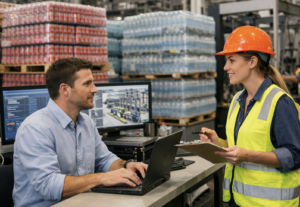
When people think about what keeps a pallet company competitive, they often picture raw materials, equipment, labor, shipping, and customer service. Those things matter. They matter a lot. But in a market where speed, consistency, visibility, and responsiveness shape who wins the business, technology has become part of the foundation. A modern Beverage Pallet Manufacturer is not just moving wood products through a facility. It is managing orders, inventory, timing, communication, quality standards, vendor coordination, and customer expectations all at once.
That is why IT is no longer something sitting quietly in the background. It is part of daily operations. It helps reduce delays, improve decision-making, support cybersecurity, strengthen communication, and create the kind of reliability customers remember. In a business where missed details can affect production schedules, warehouse flow, and delivery commitments, the companies that invest in better systems put themselves in a stronger position to grow.
Understanding Why IT Matters More Than It Used To
The role of information technology in manufacturing has expanded because the pressure on companies has expanded. Customers expect updates faster. Internal teams need clearer information. Vendors and logistics partners need tighter coordination. Leadership needs real-time visibility instead of waiting until the end of the week to discover a costly issue. A pallet company that serves beverage-related operations must often work inside demanding supply chains where timing and dependability are part of the value being sold.
That makes IT a practical business tool instead of a luxury. It supports the systems that help a company quote accurately, track materials, monitor production, manage orders, communicate across departments, and protect important data. When those systems are weak, the business feels it in waste, rework, confusion, downtime, and lost trust. When they are strong, the company moves with more confidence and fewer surprises.
Recent IT coverage continues to show why businesses across industries are paying closer attention to infrastructure, cybersecurity, AI, network reliability, and operational resilience. Reporting from Reuters, AP News, The Verge, WIRED, TechCrunch, and CISA all point in the same direction: business technology is tied directly to continuity, security, and competitiveness.
IT Keeps Production Moving When Timelines Tighten
A beverage-related supply chain does not leave much room for confusion. Orders need to be handled correctly. Inventory needs to be visible. Production needs to stay organized. Delivery schedules need to stay on track. If a manufacturer is relying on disconnected spreadsheets, outdated processes, or inconsistent internal communication, even a small issue can ripple outward fast.
Strong IT systems help create control. They can support inventory tracking, digital scheduling, workflow visibility, and shared access to current information. That means production teams are not operating from outdated notes. Sales is not making promises without accurate data. Managers are not chasing answers that should already be visible. It becomes easier to spot bottlenecks, correct issues earlier, and keep commitments to customers.
For a beverage pallet operation, this matters because customers are often balancing their own deadlines and distribution demands. If a pallet manufacturer becomes known for avoidable delays, inconsistent communication, or limited visibility, it becomes easier for buyers to look elsewhere. IT helps protect against that by giving the business stronger operational discipline.
Better IT Improves Accuracy Across the Entire Business
Mistakes in manufacturing are expensive, but the real cost often goes beyond the mistake itself. There is the labor to correct it, the time lost, the disruption to workflow, the strain on the customer relationship, and the internal frustration that follows when people are forced to clean up preventable issues. Good IT reduces those risks by helping teams work from cleaner, more consistent information.
When quoting, ordering, scheduling, production, invoicing, and customer communication are better connected, there are fewer handoff problems. Fewer things get missed. Teams can follow the same version of the truth instead of building decisions around separate documents or disconnected systems. That kind of clarity matters for material planning, production sequencing, fulfillment, and customer follow-through.
Accuracy also shapes reputation. Customers remember whether a company is organized. They remember whether information was clear, whether orders were handled properly, and whether communication felt steady. IT supports that professionalism in ways customers may never directly see, but they absolutely feel.
Cybersecurity Is Now a Business Issue, Not Just a Tech Issue
A manufacturer may think of cybersecurity as something that matters more to banks, hospitals, or giant software companies. That mindset is too risky now. Manufacturing businesses are part of larger ecosystems, and those ecosystems depend on secure operations. A compromised email account, a vulnerable network device, or an exploited system can disrupt purchasing, scheduling, invoicing, communication, and trust.
This is one reason IT deserves more strategic attention. Good IT does not just mean faster computers or updated software. It means backups, access controls, network protection, device management, patching, monitoring, and sensible security practices that reduce unnecessary exposure. The goal is not fear. The goal is resilience.
That matters even more as cybersecurity warnings keep pointing toward real risks in infrastructure and business systems. Government alerts and major technology reporting continue to emphasize exploited vulnerabilities, supply chain concerns, and rising digital threats that can affect normal business operations. For manufacturers, protecting continuity is part of protecting revenue.
IT Helps Leadership Make Better Decisions Faster
Many companies are not held back by a lack of effort. They are held back by slow visibility. Leaders may care deeply about the health of the business, but if they are forced to rely on incomplete reports, delayed updates, or manual follow-up to understand what is happening, they lose time and momentum. IT helps solve that problem.
Better reporting systems can give leadership clearer insight into production flow, inventory usage, order volume, labor efficiency, shipping activity, and service issues. Instead of reacting after the damage is done, leadership can respond earlier. That can improve margins, reduce waste, and help the business plan more confidently.
For a beverage pallet manufacturer, faster and better information can support smarter purchasing, stronger customer communication, and more disciplined operations. It can also help leadership see where growth is possible and where hidden friction is slowing the company down. That kind of visibility becomes a competitive advantage because the company is not operating on guesswork.
Customers Trust Companies That Feel Organized
Trust is not built only through marketing language. It is built through experience. Customers notice whether a business replies quickly, follows through, keeps records straight, and communicates with confidence. Those things are often supported by technology behind the scenes.
When IT is weak, the customer experience can feel scattered. Messages are missed. Order details get buried. Staff members give inconsistent answers. Updates are delayed. Problems take too long to resolve. None of that inspires confidence. On the other hand, when systems are structured well, the company feels more dependable. That helps the brand feel stronger even before a customer visits the facility or sees the finished product.
In a competitive market, dependable service becomes part of the sales process. Buyers want to know they can count on the company. Good IT helps make that possible by reducing friction inside the business and helping employees respond with more clarity and confidence.
IT Supports Growth Without Letting Chaos Grow With It
Growth is exciting, but growth can expose weakness fast. More orders, more customers, more materials, and more moving parts create more chances for information to break down. A company that grows without strengthening its systems can find itself dealing with more confusion instead of more progress.
That is where IT becomes deeply valuable. It helps a business scale in a healthier way. Systems can support better communication, cleaner documentation, stronger tracking, and more consistent workflows. Instead of depending on memory or patchwork habits, the company can build repeatable processes that hold up as demand increases.
This matters for companies that want long-term strength, not just short-term sales. A beverage pallet manufacturer that uses IT well can grow with more stability, protect service quality, and create a stronger foundation for future expansion.
Conclusion
A competitive manufacturing company cannot afford to treat IT like an afterthought. Technology now touches the pace of communication, the accuracy of orders, the stability of operations, the security of business systems, and the quality of customer experience. That makes it part of the real work of staying competitive.
For a beverage pallet company, that is especially important. The business depends on timing, reliability, coordination, and trust. IT helps strengthen all four. It helps reduce operational drag, support smarter decisions, protect business continuity, and create a more dependable experience for customers and partners alike.
That is why a Beverage Pallet Manufacturer needs IT to stay competitive. It is not about chasing trends. It is about building a business that runs better, serves customers better, and stands stronger in a market where reliability matters.

Marilyn Gibson
Related Posts
- 6 months ago